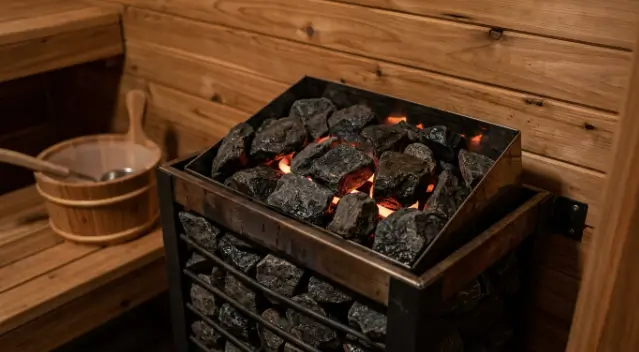

Set an electric sauna heater to 170 to 190 degrees Fahrenheit for a traditional session, allow 20 to 30 minutes of preheat before entering, and plan on sessions of 10 to 20 minutes with a cool-down break between rounds. Etiquette matters as much as the numbers: sit on a towel, keep the door closed except when entering or leaving, and pour water on the rocks only in small amounts if the heater’s manual allows it, since some digital heater models are not built for water contact.
What Temperature Should the Heater Actually Be Set To?
Most traditional sauna sessions run between 170 and 190 degrees Fahrenheit, with 180 degrees a common middle ground that suits most first-time and experienced users alike. Beginners often start closer to 150 to 160 degrees for the first few sessions and work upward as their tolerance builds, rather than jumping straight to 190 and cutting the session short from discomfort. Humidity from water on the rocks makes a given temperature feel considerably hotter, so a session at 170 degrees with regular water can feel as intense as a dry session at 190.
How Long Should Preheat Actually Take?
A properly sized electric heater in a well-insulated cabin typically reaches 170 to 190 degrees in 20 to 30 minutes from a cold start, though an undersized heater or a drafty cabin can stretch that closer to 45 minutes. Starting the heater from a phone app or an external timer before leaving work or finishing dinner is a common habit among regular users, since it removes the wait once someone is actually ready to sit down. Checking the thermostat reading rather than guessing by feel avoids entering too early, when the cabin has not fully stabilized and one side of the room may still be noticeably cooler than the other.
How Long Should Each Session Actually Last?
Ten to twenty minutes per round is the typical range, with most people finding 15 minutes a comfortable middle point for a single session. Two or three rounds separated by a five to ten minute cool-down outside the cabin is a common pattern for a longer visit, rather than one continuous 40-minute sit that risks overheating or dehydration. Leaving the cabin the moment lightheadedness, a racing heart, or nausea sets in matters more than hitting a specific time target, since tolerance varies session to session even for the same person.
Is It Fine to Pour Water on the Rocks With an Electric Heater?
Most traditional electric heaters with an open rock bed are designed to handle small amounts of water, which produces a burst of steam known as loyly that raises the perceived heat and humidity briefly. Some newer digital or low-profile heater models, particularly compact units built for tight indoor installs, explicitly warn against water contact in the manual, since it can damage the electronics or void the warranty. Checking the specific heater’s manual before ever pouring water is worth the two minutes it takes, since not every electric heater on the market is built the same way underneath the rock bed.
What Sauna Etiquette Actually Matters in a Shared or Home Setting?
Sitting on a towel rather than bare skin against the wood bench keeps sweat off the wood, which extends the life of the cedar or spruce paneling and keeps the cabin more pleasant for the next person. Keeping the door closed except when entering or leaving preserves the heat the elements just spent energy building, since every extended door opening lets warm air escape and forces the heater to work harder to recover. In a household with more than one regular user, agreeing on a general temperature range in advance avoids the common friction of one person constantly adjusting the thermostat to their own preference mid-session.
What Should Happen After a Session Ends?
A short cool-down, whether a lukewarm shower, a walk outside, or simply sitting at room temperature for a few minutes, lets heart rate and skin temperature come back down gradually rather than all at once. Rehydrating with water afterward matters more than most first-time users expect, since a 15 to 20 minute session at 180 degrees produces meaningful sweat loss. Leaving the cabin door propped open for ten to fifteen minutes after the last round of the day helps residual humidity escape rather than sitting inside the wood overnight, which over time helps the cabin and the heater’s lower components last longer.
Why Do Timing and Temperature Guidelines Line Up With the Research on Regular Use?
The 15 to 20 minute session length and multiple-times-a-week frequency common in etiquette guides roughly track the pattern used in the Finnish cohort research most often cited on sauna bathing. A widely read review in Mayo Clinic Proceedings summarized cardiovascular and other associations linked to sauna sessions at these kinds of durations and frequencies, and a systematic review in Evidence-Based Complementary and Alternative Medicine reported similar physiological findings from regular dry sauna use following a comparable pattern. An earlier review in The American Journal of Medicine covered both benefits and risks at these typical temperatures and durations, including which groups should be more cautious. None of this is a prescription that everyone must follow exactly, but it explains why the common etiquette guidance and the population studies most people reference tend to describe a similar routine rather than wildly different ones.
How Do Buyers Compare Heater Models Before Choosing One?
Once the basics of temperature, timing, and etiquette are clear, the remaining decision is usually which specific heater fits the cabin’s size and the household’s budget. Kilowatt rating, rock capacity, and whether the unit ships with a digital or mechanical controller are the main specs worth lining up side by side, and product pages that list all three clearly, such as where a shopper can compare models here, make that comparison faster than digging through separate manufacturer sites one at a time.
Frequently Asked Questions
What is the ideal sauna temperature for a beginner? 150 to 160 degrees Fahrenheit is a reasonable starting point for someone new to sauna use, moving up toward 170 to 190 degrees as tolerance builds over several sessions.
How long does it take an electric heater to preheat a sauna? A properly sized heater in a well-insulated cabin typically takes 20 to 30 minutes to reach 170 to 190 degrees, while an undersized heater or drafty cabin can take closer to 45 minutes.
Can you pour water on the rocks of any electric sauna heater? Not always. Most open rock-bed heaters handle small amounts of water fine, but some compact digital models warn against water contact in the manual. Checking the specific model’s instructions first is worth the time.
How many sauna sessions per week is typical for a home user? Two to seven sessions a week is common depending on the household, with three to four a realistic middle ground for people building a regular habit without daily use.
References
- Cardiovascular and Other Health Benefits of Sauna Bathing: A Review of the Evidence, Mayo Clinic Proceedings, 2018
- Clinical Effects of Regular Dry Sauna Bathing: A Systematic Review, Evidence-Based Complementary and Alternative Medicine, 2018
- Benefits and risks of sauna bathing, The American Journal of Medicine, 2001
By Teresa Vaughn